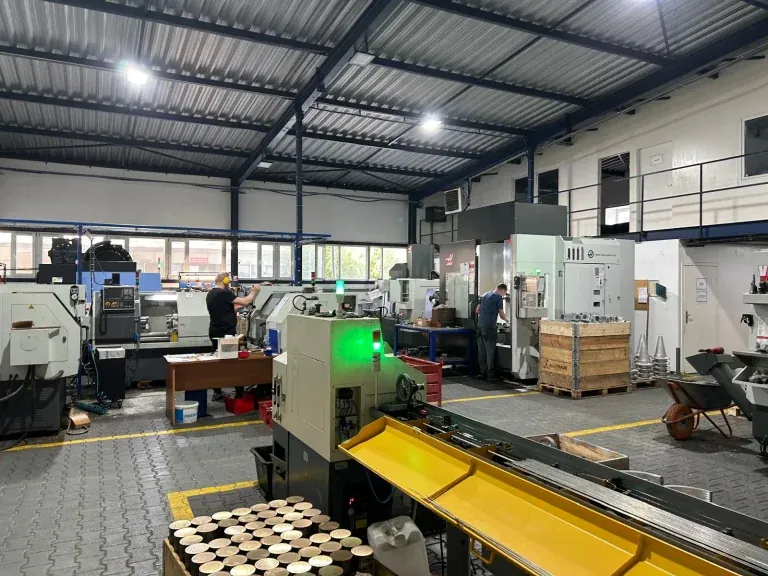

Machining of Aluminum Castings
What affects the material structure of castings in CNC machining?
Table of contents (6)
CNC machining is a process that can resemble artistic sculpting in stone. What factors influence how the final product will look? What determines the material structure of castings during this complex process? These are questions that intrigue not only engineers but also anyone passionate about technology.
As in cooking, the ingredients are the key to success. Material properties such as chemical composition i microstructure, play a key role in shaping the final structure of castings. Whether a material is hard as diamond or flexible as rubber affects how it will be processed. Imagine trying to carve something out of soft butter on a hot day – the same applies to low-strength materials in CNC machining.
CNC machining techniques such as milling i turning, are like different brushes in a painter's hand. Each technique affects the material structure of castings through changes in stresses and surface texture. Did you know that different tools can leave "fingerprints" on the surface of the material? Indeed, they determine the final appearance and mechanical properties of the product.
Imagine trying to bake a cake in a humid kitchen – environmental conditions such as temperature i humidity, can significantly affect the material structure of castings during CNC machining. It is like trying to keep your balance on a tightrope during a storm – difficult, but achievable with proper control. These changes can lead to unexpected results in the form of altered mechanical properties of the material.
Quality control is like a guardian that makes sure the material structure of castings meets design requirements and industry standards. Without it, the entire CNC machining process could go to waste, and the final product would fall short of expectations. Isn't it similar to trying to take a perfect photo without proper lighting?
Modern technologies such as ultrasonic machining i 3D printing, bring new possibilities for controlling the material structure of castings. It is like adding a new color to an artist's palette – it opens up new horizons and possibilities. Thanks to them, we can achieve accuracy and precision that were out of reach not long ago.
In summary, the material structure of castings in CNC machining is the result of many complex factors that work like an orchestra to create a harmonious final product. Isn't it fascinating how many elements must work together to achieve excellence?
Material properties
Material properties are like the DNA of a casting, defining its final structure and characteristics. Have you ever wondered why some materials behave differently during CNC machining? It is chemical composition and microstructure that play the key role here. Chemical composition of a material is like a cake recipe – every ingredient must be precisely selected to achieve the desired result.
For example, the presence of carbon in steel can significantly affect its hardness and strength. Microstructure, on the other hand, is like texture in painting – it affects how the material responds to different machining techniques. Proper control of the microstructure can determine whether a casting has adequate strength and durability.
To better understand these relationships, let's look at a few key elements:
- Chemical composition: The content of elements such as carbon, silicon, or manganese affects mechanical properties.
- Microstructure: The arrangement of grains and phases in the material, which can be controlled through processes such as hardening or tempering.
- Material phases: Different phases, such as austenite or ferrite, have unique properties that influence the behavior of the material.
Keep in mind that a material is not just a collection of elements, but a complex network of interdependencies that influence its behavior during CNC machining. That is why choosing the right material is critical to the success of the entire production process. As you can see, understanding material properties is like exploring an unknown world where every element plays a part in producing a flawless casting.
Machining techniques
CNC machining techniques are like sculptors, shaping raw materials into works of art with precision and skill. Have you ever wondered how milling or turning affects the material structure of castings? It is a fascinating process, much like a game of chess, where every move matters. Milling i turning are among the most popular techniques, altering stresses and surface texture much like a painter adding new brushstrokes to a canvas.
During milling, material is removed from the surface with cutting tools, which can lead to microscopic cracks and changes in the crystalline structure. It is like modeling clay, where every push changes its shape. In turn, turning involves rotating the material, which produces smooth, cylindrical surfaces. Thanks to this process, the material is effectively polished, which affects its strength and durability.
It is worth noting that selecting the right tools and machining parameters is critical to achieving the desired results.
- Cutting speed
- Depth of cut
- Tool type
are just some of the factors that can influence the final material structure. Imagine you are a chef choosing ingredients and cooking techniques to create the perfect dish. It is the same in CNC machining: every detail matters.
In summary, CNC machining techniques are not just mechanical processes but a true engineering craft. Every decision, from tool selection to machine settings, affects the final product. It is like assembling a puzzle, where every piece must fit perfectly to form a coherent whole. That is why it is so important to understand and control these processes to achieve the best results.
Environmental conditions
Environmental conditions play a key role in CNC machining, influencing the material structure of castings. Have you ever wondered how temperature or humidity can affect the final product? Imagine castings are like a cake: too high a temperature can "burn" them, while too low a temperature means they won't "bake" properly. The same applies to CNC machining, where every degree matters.
Ambient temperature can affect the thermal expansion of materials, which in turn can lead to unwanted stresses in the casting structure. High humidity can introduce moisture into the material, which over the long term can lead to corrosion or other undesirable changes. That is why controlling these parameters is so important.
It is also worth considering the influence of other environmental factors, such as atmospheric pressure or air pollution. They can affect the chemical processes that occur during machining, as well as the quality of the air that machine operators breathe.
To better understand these relationships, consider the following example:
| Parameter | Effect on the material |
|---|---|
| Temperature | Changes in thermal expansion, stresses |
| Humidity | Risk of corrosion, structural changes |
| Atmospheric pressure | Effect on chemical processes |
As you can see, proper control of environmental conditions can be the key to success in CNC machining. That is why modern monitoring and control technologies are increasingly used to maintain optimal working conditions.
In summary, environmental conditions act like an invisible hand that shapes the material structure of castings during CNC machining. Ignoring their influence can lead to unpredictable results, which is why it is so important to keep them in mind at every stage of production.
The importance of quality control
Quality control is the heart of every production process, and in the context of CNC machining, its importance cannot be overstated. Why? Because every detail matters. Imagine assembling a complex puzzle in which every piece must fit perfectly. The same is true of castings: their material structure must meet strictly defined standards. But how do you achieve that?
First of all, quality control ensures that the material structure of castings complies with design requirements and industry standards. In practice, this means that every stage of production, from material selection to final machining, must be monitored. But that is not all! It is equally important that quality control be a continuous process, not a one-time action.
In the context of CNC machining, quality control comprises a number of activities that can be divided into several key stages:
- Material inspection – checking the quality of raw materials before machining begins.
- Process monitoring – ongoing tracking of machining parameters such as speed, temperature and humidity.
- Final inspection – detailed analysis of the finished product for compliance with requirements.
Without proper quality control, the entire CNC machining process can be like building a sandcastle – beautiful on the outside, but fragile on the inside. That is why it is so important that every link in the production chain is carefully controlled. Only then can you be sure that the final product will meet the expectations of both designers and customers.
The role of modern technologies in quality control is also worth mentioning. They make it possible to introduce automation i precise monitoring, which further increases process reliability. Innovative solutions such as 3D scanning or computer analysis, make it possible to identify potential problems before they even arise.
In summary, quality control is not just an add-on to the CNC machining process. It is an integral part of it, without which achieving high quality and durability of castings would be impossible. It is thanks to quality control that we can speak of true manufacturing excellence.
Modern Technologies in CNC Machining
Today, innovative technologies have revolutionized the way we approach CNC machining. Have you ever wondered how far we have come from traditional methods? Modern technologies such as ultrasonic machining i 3D printing, open up entirely new possibilities.
Ultrasonic machining is like a magic wand in the hands of an experienced engineer. By using ultrasonic waves, extremely precise results can be achieved. This technology allows for stress reduction in materials, which improves their structure and mechanical properties.
3D printing, in turn, often compared to a modern alchemist, adds an entirely new dimension to CNC machining. With this technology, we can create complex structures that were previously unattainable. 3D printing enables not only prototyping, but also the production of parts with complex geometries, which is particularly important in the aerospace and medical industries.
Of course, each of these technologies has its own unique advantages and applications. The table below gives a brief overview:
| Technology | Advantages of | Applications |
|---|---|---|
| Ultrasonic machining | Precise stress control, improved structure | Automotive and aerospace industries |
| 3D Printing | Creating complex geometries, prototyping | Medical and aerospace industries |
In summary, modern technologies in CNC machining are like opening a door to a new world of possibilities. Each of them brings something unique that makes the production process more efficient and precise. Are you ready to step into the future of CNC machining?
Frequently Asked Questions
Which material properties are most important in CNC machining?
Properties such as chemical composition and microstructure are key. They determine how the material will behave during machining. Without the right properties, even the best techniques can fail. Isn't it fascinating how chemistry and physics work together to create something solid?
Which CNC machining techniques have the greatest impact on the material structure of castings?
Techniques such as milling and turning change stresses and surface texture. It is like magic in motion – one move of the tool and the material structure changes before our eyes. That is why choosing the right technique is so important.
How do environmental conditions affect the CNC machining process?
Temperature and humidity can change the mechanical properties of a material. It is like playing poker with nature – you never know what hand you will get. That is why it is so important to control these conditions to avoid unexpected changes in the material structure.
Why is quality control so important in CNC machining?
Quality control ensures that the material structure meets design requirements and industry standards. It is like a guard on duty – without it, the whole process can collapse. Thanks to it, we can be sure that everything is in its place.
How do modern technologies affect CNC machining?
Modern technologies such as ultrasonic machining and 3D printing open up new possibilities. It is like a leap into the future – suddenly everything becomes possible. Thanks to them, we can better control the material structure of castings, which was previously unattainable.
Author: Poznań Foundry team
Poznań Foundry is a brand of Adjatech Metalworking Sp. z o.o., a family-owned non-ferrous foundry in Poznań. The Brukwicki family has been in foundry pattern making since 1950. We cast aluminum alloys in permanent molds, in sand molds and by high-pressure die casting; we machine the castings on CNC machines and powder coat them. We operate under ISO 9001 and ISO 14001 management systems (TÜV Rheinland Polska certificates).