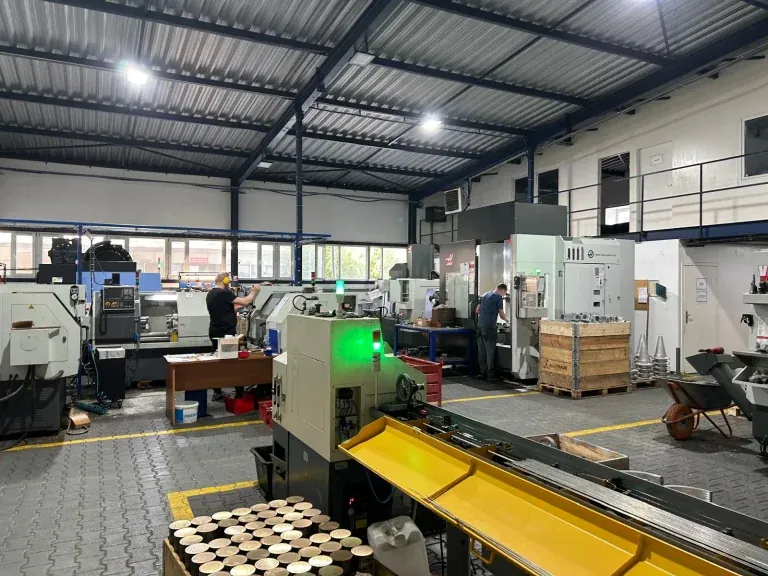
Machining of Aluminum Castings
Selecting Cutting Parameters for Aluminum: The Key to Success
Table of contents (6)
How do you machine aluminum effectively? This question occupies many specialists in the metalworking industry. Aluminum, a material with unique properties, requires a precise approach to the cutting process. Choosing the right parameters is like finding the right key for a lock: it ensures a smooth and efficient process. Have you ever wondered how important it is for every piece of the puzzle to fit together perfectly?
In this article, we focus on the key factors that affect machining quality and production efficiency. Cutting speed, tool selection, and proper cooling and lubrication are just some of the elements that must be matched precisely to the characteristics of aluminum. Each of them is like a cog in a machine: if one fails, the entire process can be disrupted.
Why does this matter? Aluminum is lightweight yet durable, which makes it an ideal choice in many industries, from aviation to electronics. However, machining it requires special attention. Incorrect parameters can lead to excessive tool wear, poorer surface quality, or even damage to the material. It's like driving a car without proper preparation: the risk is too high.
In the following sections of the article, we take a closer look at each of these aspects. We begin with cutting speed, which is crucial for surface quality and tool life. Next, we discuss how important selecting the right cutting tools is, and how cooling and lubrication can affect machining efficiency. Finally, we look at various cutting strategies and methods of parameter optimization in real time.
Each of these elements is a step toward success in aluminum machining, so it is worth taking the time to understand them and apply them correctly. After all, as the old saying goes, "prevention is better than cure."
Read on for detailed information that will help you achieve perfection in aluminum cutting.
The Importance of Cutting Speed
Cutting speed is one of the most important factors affecting the quality of aluminum machining. Have you ever wondered why cutting speed matters so much? Think of it like running a marathon: going too fast can lead to exhaustion, while going too slow means losing your advantage. Similarly, in metalworking, the right speed is the key to optimal results.
Choosing the right cutting speed depends on many factors, such as the type of aluminum, the cutting tool, and surface quality requirements. For different types of aluminum, such as 6061 aluminum or 7075 aluminum, the optimal speeds may differ. Below are general guidelines:
| Aluminum Type | Cutting Speed (m/min) |
|---|---|
| 6061 | 300-500 |
| 7075 | 200-400 |
As you can see, different aluminum alloys require different cutting speeds, which is critical for maintaining tool life and surface quality. Excessive speed can lead to tool overheating and faster wear, while too low a speed can result in an uneven surface and longer machining time.
That is why it is so important to carefully review the material and tool specifications before starting the cutting process. It is also worth considering modern technologies such as CNC, which allow precise parameter setting and real-time speed monitoring.
In short, cutting speed is like a well-oiled machine: when it works properly, everything runs smoothly and efficiently. It is therefore worth taking the time to select it correctly to ensure success in aluminum machining.
Choosing Cutting Tools
Choosing the right cutting tools is like choosing the perfect dance partner: it has to be precise, well coordinated, and reliable. When machining aluminum, it is essential that tools are not only sharp but also matched to the characteristics of the material. Why does this matter? Because a poorly chosen tool can lead to unnecessary material loss and even machine damage.
Aluminum is a relatively soft material and requires tools with specific properties. Wondering what those are? First of all, tools must be made of wear-resistant materials such as cemented carbide or ceramics. It is like choosing the right running shoe: it must be light but durable.
Tool geometry also deserves attention. An edge with the right rake angle and shape can significantly affect cutting quality. Did you know that even a small change in angle can improve machining efficiency? It is like the difference between cycling uphill and downhill: one small detail, a huge difference!
Here are some key types of tools worth considering for aluminum machining:
- End mills – ideal for precise surface finishing.
- Twist drills – excellent for producing holes with high accuracy.
- Turning tools – indispensable for turning external and internal surfaces.
In summary, choosing cutting tools is not only a technical matter but also a strategic one. Properly selected tools can significantly increase production efficiency and quality. Remember that in aluminum machining, tools are like keys to success: without them, the door to efficiency stays closed.
Cooling and lubrication
Cooling and lubrication are essential of the aluminum cutting process. Why? Imagine trying to run a marathon in the heat without a drop of water. Cutting tools likewise need adequate cooling to work efficiently and reliably. Proper cooling not only lowers temperature but also extends tool life and improves the surface quality of the machined part.
Choosing the right cooling and lubrication method is like choosing the right drink to go with a meal: it has to suit the task at hand. There are several common methods worth considering:
- Liquid cooling: The most commonly used method, based on water-based emulsions or cutting oils that effectively remove heat.
- Oil mist cooling: Used when conventional liquid cooling is insufficient. It provides better lubrication and cooling while reducing coolant consumption.
- Air cooling: A method used in less demanding processes where intensive cooling is not required.
The choice of method depends on many factors, such as the type of aluminum, cutting speed, and specific production requirements. For more precise operations, such as machining thin-walled parts, liquid cooling may be essential to prevent material deformation.
We must not forget about environmental aspects cooling and lubrication. Modern technologies aim to minimize negative environmental impact, so biodegradable coolants and recirculation systems are increasingly used.
In summary, aluminum cutting is not only a matter of choosing the right technology but also of understanding the material and the production requirements. It is like choosing the right strategy in a game: the key to success lies in the details.
Cutting Strategies
In metalworking, cutting strategy can be compared to a road map that leads us to our goal: efficient, precise production. Which strategies are worth applying to achieve the best results when machining aluminum? Let's start with the basics.
Aluminum has unique properties that call for a specific approach. Have you ever wondered why some machining processes are more efficient than others? The key is to adapt the strategy to the specific requirements of the material. By choosing the right strategy, we can not only increase efficiency, but also improve the quality of the finished product.
One of the most important strategies is high-speed machining. It allows us to significantly shorten machining time, which translates into higher productivity. However, to avoid excessive tool wear, you need to select suitable parameters such as feed rate and depth of cut. It's a bit like walking a tightrope: a speed that is too high can lead to errors, while one that is too low can reduce efficiency.
Another popular strategy is adaptive machining. This approach allows cutting parameters to be adjusted dynamically in real time, which is particularly useful when material properties vary. Imagine you are the captain of a ship on a rough sea: you must be ready to change course quickly to avoid danger.
It is also worth considering a multi-stage machining strategy. It involves dividing the process into several stages, each with its own specific task. This gives us better control over surface quality and minimizes the risk of damage. It's like building a house: first the foundations, then the walls, and finally the roof.
In summary, choosing the right machining strategy is the key to success in aluminum machining. Each of the methods described has its advantages and can be tailored to individual production needs. Keep in mind that efficient machining depends not only on selecting the right tools, but also on flexibility and a readiness to adapt to changing production conditions.
Optimizing Cutting Parameters
Optimizing cutting parameters is like finding the golden mean in the art of aluminum machining. Have you ever wondered how master chefs choose the perfect ingredients to create an outstanding dish? Similarly, in machining, selecting the right parameters is the key to success. But how do you do it?
The foundation is analysis and monitoring of parameters in real time. Imagine that your shop is an orchestra and you are the conductor. Every instrument must be tuned to achieve harmony. Adjusting cutting speed, depth of cut and feed rate is like setting the key, tempo and dynamics. How do you achieve this?
First, it is important to rely on data analysis. With modern technologies such as CNC systems, we can collect and analyze data in real time. It's like having a treasure map that leads us to hidden optimization opportunities. It is worth investing in software that lets you monitor and analyze machine performance.
Second, we must not forget about fresh perspectives. Sometimes it pays to look at a problem from a different angle. Did you know that physics has a concept called the "butterfly effect"? A small change in one place can trigger enormous changes in another. The same is true in machining: a small adjustment of parameters can significantly affect production efficiency.
It is also worth considering running tests on smaller batches of material. It's like trying out new recipes in the kitchen: before serving them at a big dinner, you test them on a smaller group. This way we can see which parameters work best and introduce them on a larger scale.
In summary, optimizing cutting parameters is a process that requires continuous improvement and openness to new technologies. Remember that every material is different, and selecting the right parameters is the key to achieving excellence in aluminum machining. As in life, the key is balance and the ability to adapt to changing conditions.
Frequently Asked Questions
What are the best cutting speeds for aluminum?
The right cutting speed depends on the type of aluminum and the tool you use. As a rule, higher cutting speeds can improve surface quality, but they can also shorten tool life. The key is to find the golden mean that delivers optimal performance.
What cutting tools are best for machining aluminum?
Aluminum is most often machined with carbide tools or tools with diamond coatings. The choice of tool depends on the specific production requirements and the type of aluminum you are machining. A good tool is one that delivers both precision and durability.
Why are cooling and lubrication so important when machining aluminum?
Cooling and lubrication help reduce the friction and heat generated during cutting. This not only extends tool life but also improves surface finish quality. Proper cooling and lubrication methods can significantly increase the efficiency of the entire process.
What cutting strategies are the most effective for aluminum?
Cutting strategies should be adapted to the specific material and production requirements. For example, for thin-walled parts, strategies with a smaller depth of cut work better to avoid deformation. Understanding the material and production conditions is the key to choosing the best strategy.
How can I optimize cutting parameters in real time?
Optimizing cutting parameters in real time requires monitoring the process with advanced analytical tools. You can use sensors and data analysis software to adjust parameters on the fly, which improves production efficiency and quality.
Author: Poznań Foundry team
Poznań Foundry is a brand of Adjatech Metalworking Sp. z o.o., a family-owned non-ferrous foundry in Poznań. The Brukwicki family has been in foundry pattern making since 1950. We cast aluminum alloys in permanent molds, in sand molds and by high-pressure die casting; we machine the castings on CNC machines and powder coat them. We operate under ISO 9001 and ISO 14001 management systems (TÜV Rheinland Polska certificates).